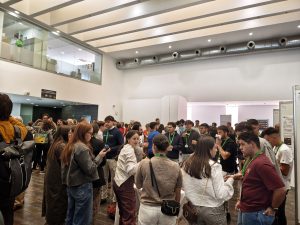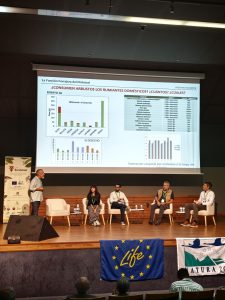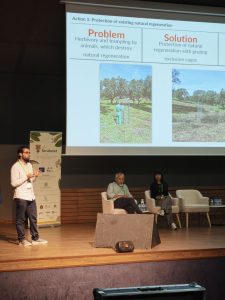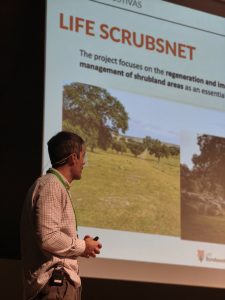
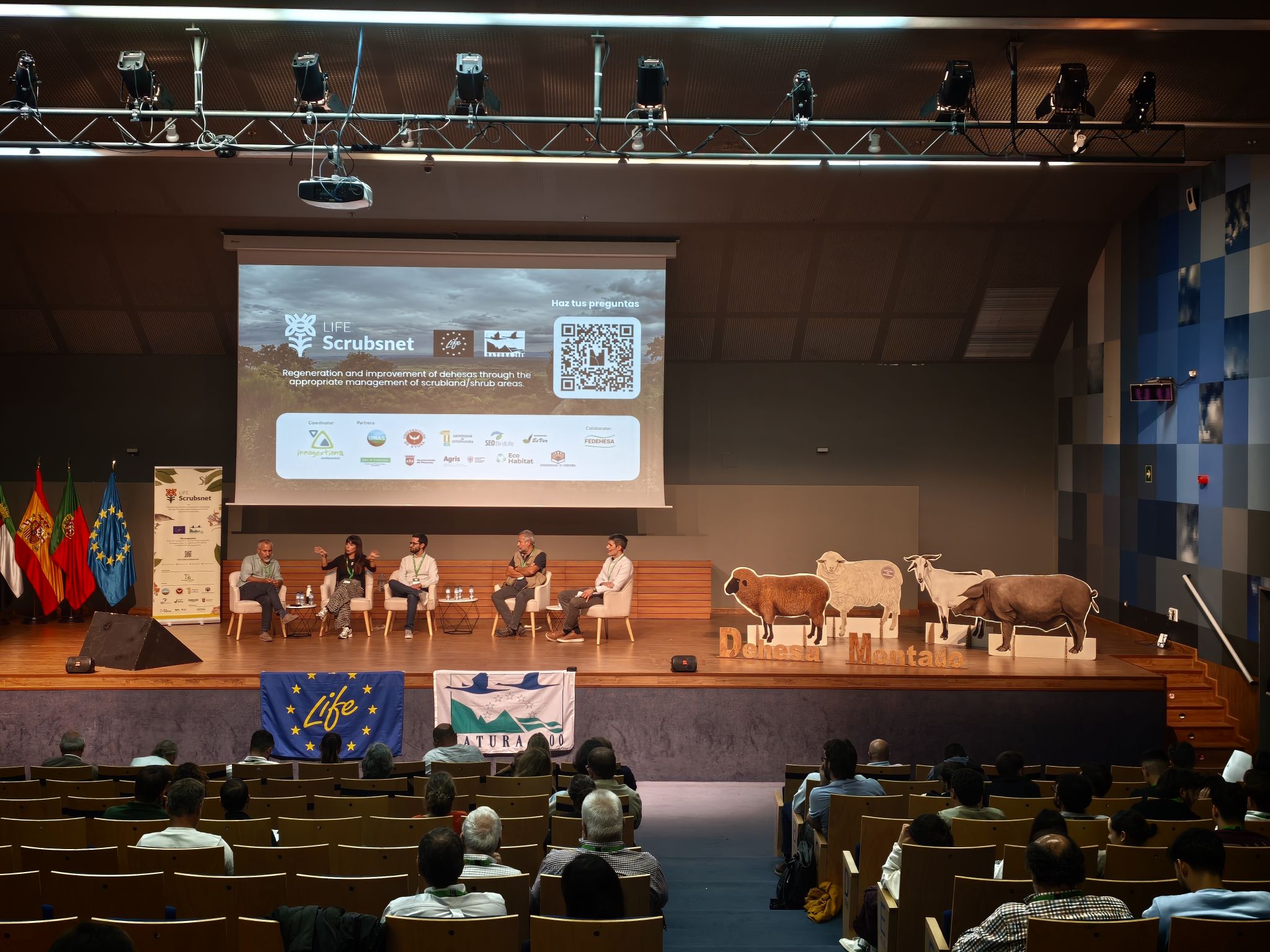
On 28 October, IFEBA in Badajoz hosted the Final Event of the LIFE ScrubsNet project, held within the framework of the 6th Iberian Dehesa and Montado Congress. The event brought together researchers, professionals, land managers and organisations linked to these agroforestry systems to share the main results and lessons learned throughout the project.
Innogestiona Ambiental took part in the event through Juan Pablo Martín, a member of the organisation’s team, who moderated the different interventions and guided a session focused on the sustainable management, conservation and revitalisation of dehesa and montado systems.
The event began with a general presentation of the LIFE ScrubsNet project, its consortium, pilot farms and main lines of work, followed by a networking session among participants.
LIFE ScrubsNet’s main results at the heart of the event
From 15:30 onwards, the session focused on the presentation of the main results achieved by LIFE ScrubsNet.
One of the first presentations addressed the conservation and renaturalisation of dehesa/montado systems through the sustainable management of shrub layers and natural regeneration, highlighting the role that appropriate shrub management can play in the recovery and conservation of these systems.
The event continued with a presentation on the interaction between shrub species and soil health, with particular attention to the role of so-called “shrub islands” in dehesa and montado systems and their influence on soil conditions.
Animal biodiversity was also given a prominent place, with a session focused on good practices that can help support the conservation of fauna associated with dehesa and montado landscapes.
The relationship between livestock and shrub species within these systems was then explored, a key aspect for understanding how grazing and livestock management can influence vegetation structure and the ecological balance of dehesa and montado systems.
The programme concluded with a presentation on shrub biodiversity, especially forage plants, and their relationship with payments received by farms under the Common Agricultural Policy (CAP), linking environmental management with its economic and productive dimension.
An integrated vision of dehesa and montado systems
The different presentations highlighted one of the main messages of the LIFE ScrubsNet project: the need to manage dehesa and montado systems from an integrated perspective.
Trees, shrubs, soil, biodiversity, grasslands and livestock form part of an interconnected system in which management decisions affecting one element can have direct consequences for the others.
The event therefore explored different tools and approaches aimed at promoting regeneration, conserving biodiversity and improving the resilience of these systems, while at the same time maintaining their productive function.
Innogestiona Ambiental’s commitment to knowledge transfer
Juan Pablo Martín’s role as moderator helped guide and facilitate this exchange between specialists, linking the different results presented with the experiences developed within the project.
For Innogestiona Ambiental, the LIFE ScrubsNet Final Event represented an opportunity to contribute to the transfer of the knowledge generated during the project and to strengthen the dialogue between research, land management and the productive sector.
The event, held from 14:00 to 18:00 at IFEBA, marked the conclusion of several years of work aimed at revitalising semi-arid extensive farming habitats through the sustainable management of their associated shrub areas.
The end of the project does not, however, mean the end of its impact. The knowledge generated, the experiences developed on the pilot farms and the practices analysed throughout LIFE ScrubsNet provide a valuable basis for continuing to move towards more sustainable, resilient dehesa and montado systems that are better prepared for future challenges.