
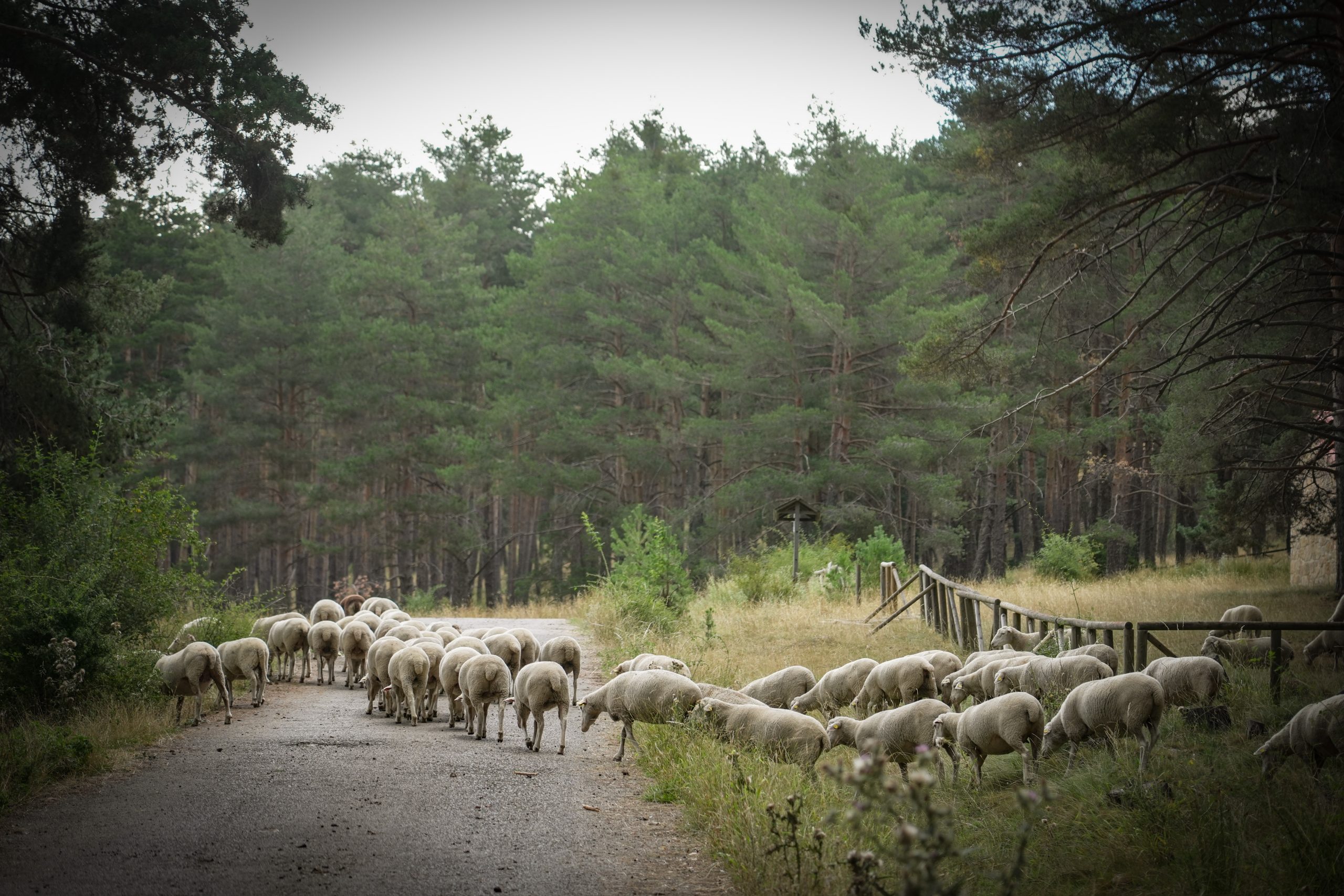
The Safeguarding Plan for Transhumance in Spain and its Associated Intangible Cultural Heritage, prepared by Innogestiona for the Spanish Ministry of Culture, will be presented on Saturday 3 October in Zafra (Badajoz), as part of the expanded programme of the IX Culture and Ruralities Forum.
The presentation will take place during the event “Pastoralism and native livestock breeds: the cultural, social and environmental value of a living heritage”, which will be held at the Auditorium of the Central Pavilion at the Zafra Fairgrounds, from 10:15 to 13:30.
More specifically, the presentation of the Plan is scheduled from 12:30 to 12:50 and will be delivered by Elena Vázquez, Technical Adviser at the Subdirectorate-General for the Management and Coordination of Cultural Heritage of the Spanish Ministry of Culture.
The event forms part of the Expanded Forum of the IX Culture and Ruralities Forum, a programme of activities designed to extend the territorial reach of the main event and which, in this edition, spans the entire Spanish-Portuguese border area. In this context, the Zafra event will focus on the cultural, social and environmental value of pastoralism and native livestock breeds, in line with the designation of 2026 as the International Year of Rangelands and Pastoralists.
A Plan prepared by Innogestiona
Innogestiona was responsible for the research and drafting of the Safeguarding Plan for Transhumance in Spain and its Associated Intangible Cultural Heritage, developed for the Spanish Ministry of Culture.
The work is based on the understanding of transhumance as a living cultural heritage that goes far beyond the seasonal movement of livestock. Transhumance encompasses pastoral knowledge, traditional land-management practices, livestock routes, cultural landscapes, collective memory, terminology, forms of social organisation and a wide range of knowledge passed down from generation to generation.
The preparation of the Plan made it possible to identify the main cultural elements associated with this practice, analyse the challenges affecting its continuity, and propose measures aimed at its safeguarding, transmission, dissemination and enhancement.
Culture, territory and bearer communities
The presentation of the Plan is part of a day devoted to reflecting on the links between culture, the primary sector and rural areas. Throughout the morning, different initiatives related to native livestock breeds, pastoralism and traditional agroecological systems will be presented, alongside other actions promoted by the Ministry of Culture to protect knowledge associated with extensive livestock farming.
The inclusion of the Plan in this programme provides an opportunity to continue raising awareness of transhumance as an essential part of Spain’s intangible cultural heritage and to recognise the role of the bearer communities that keep this practice alive.
An event within the Culture and Ruralities Forum
The event is organised by the Culture and Ruralities Programme of the Spanish Ministry of Culture, with the collaboration of the Entretantos Foundation, an organisation dedicated to promoting sustainability, rural development and environmental management, which also acts as a driving organisation in Spain for the International Year of Rangelands and Pastoralists.
The event will conclude with a performance by Cantareiras de la Sierra, a women’s group from the Sierra de Aracena y Picos de Aroche area, which works to recover and disseminate the musical traditions associated with rural women.
Through its presentation within the Expanded Forum, the Safeguarding Plan for Transhumance in Spain continues its public dissemination as a key tool to support the protection and continuity of a living heritage deeply connected to territory, memory and rural communities.